About Ophthalmology
Ophthalmology is one of the most promising options for medical students, whether internationally or locally. The year 2019 survey from Medscape revealed that ophthalmology residents' annual earnings touched $59,000. Naturally, there is a steady increase in the average number of applications per applicant in ophthalmology residency over the past ten years.
More Specialty InfoBrowse Ophthalmology Programs
No programs found. Try another search.
Browse Ophthalmology Open Positions
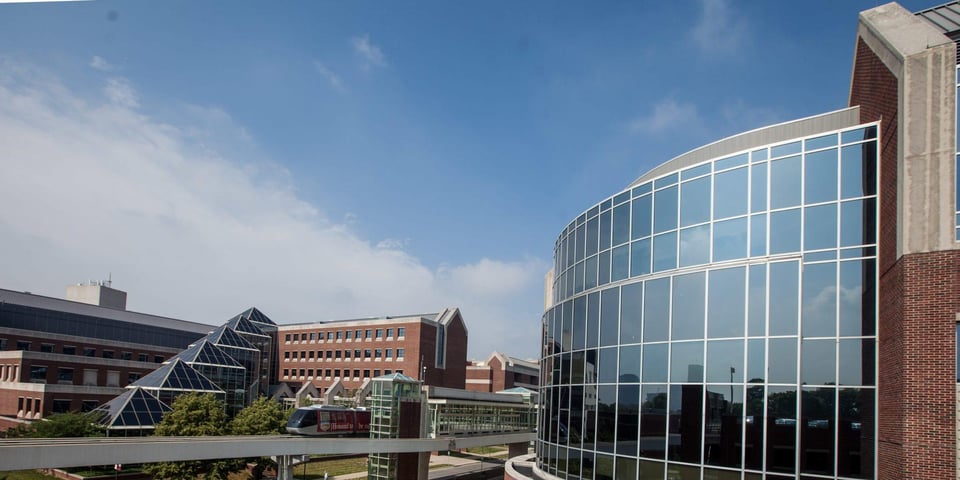
Vitreoretinal Surgery Fellowship
The Vitreoretinal Surgery Fellowship at IU School of Medicine is a two-year clinical fellowship providing broad training in all aspects…

Orthoptic Fellowship
The Division of Ophthalmology at Children's Hospital of Philadelphia is a comprehensive specialty pediatric practice, offering care for children with eye and…

Children's Hospital of Philadelphia
PGY-4. Posted on 03/01/2026Arnold and Mabel Beckman Foundation Postdoctoral Research Fellowship
The Arnold and Mabel Beckman Foundation and the University of California, Irvine, invite exceptional researchers to apply for the prestigious…

University of California, Irvine
PGY-2. Posted on 01/25/2026Fellowship in Neuro-ophthalmology
We offer a one-year fellowship in neuro-ophthalmology at the John A. Moran Eye Center, ranked among the nation’s best hospitals…

The University of Utah
PGY-4. Posted on 09/26/2025Orbit Surgery Fellowship
The fellowship offers a blend of clinical, surgical, and research experience in an academic environment. The fellow will receive a…

University Of Arkansas for Medical Sciences
PGY-4. Posted on 05/20/2025Cornea Fellowship
The cornea fellowship is a one year clinical position in the University of Alabama at Birmingham Heersink School of Medicine…

The University of Alabama at Birmingham
PGY-4. Posted on 08/21/2024Vitreoretinal Diseases and Surgery Fellowship
The University of Kansas is a prestigious university with a tertiary referral medical center. Over a two‐year period, fellows in…

University of Kansas School of Medicine
PGY-4. Posted on 07/05/2024Retina Research Fellowship
The overall goal of this newly created retina research fellowship position is to help develop research and teaching approaches necessary…
University of Kansas School of Medicine
PGY-4. Posted on 07/04/2024Neuro-Ophthalmology Fellowship
The Moran Eye Center at University of Utah has an Association of University Professors of Ophthalmology (AUPO) accredited Neuro-Ophthalmology Fellowship.…
The University of Utah
PGY-4. Posted on 04/19/2024Ophthalmic Pathology Fellowship
Ophthalmic pathology expertise is in great demand at academic medical centers with the increase in specialized clinical eye institutes and…

Stanford University
PGY-4. Posted on 03/01/2024Neuro-ophthalmology Fellowship
The Neuro Ophthalmology Fellowship at Houston Methodist Hospital in Houston, Texas is accredited through the Association of University Professors of…

Houston Methodist Hospital
PGY-4. Posted on 02/15/2024Orthoptic Fellowship
The Division of Ophthalmology at Children's Hospital of Philadelphia is a comprehensive specialty pediatric practice, offering care for children with…
Children's Hospital of Philadelphia
PGY-4. Posted on 01/12/2024Clinical and Research International Retina Fellowship
Loma Linda University Eye Institute (LLUEI) offers training in medical retina and vitreoretinal surgery. Clinical and surgical training is supervised…

Loma Linda University Medical Center
PGY-4. Posted on 10/25/2023Pediatric Ophthalmology Fellowship
The mission of the UC San Diego Ratner Children’s Eye Center Pediatric Ophthalmology fellowship is to train American and International…

University of California San Diego, School of Medicine
PGY-4. Posted on 08/29/2023Glaucoma Fellowship
The glaucoma fellowship is a one year clinical position in the University of Alabama at Birmingham Heersink School of Medicine…
The University of Alabama at Birmingham
PGY-4. Posted on 08/26/2023Ophthalmology Specialty Guide
Overview
Ophthalmology is one of the most promising options for medical students, whether internationally or locally. The year 2019 survey from Medscape revealed that ophthalmology residents' annual earnings touched $59,000. Naturally, there is a steady increase in the average number of applications per applicant in ophthalmology residency over the past ten years.
Since applicants perceive it is challenging to secure a match in the ophthalmology residency, they apply to various programs so as to receive more interview invitations and increase the probability of matching successfully. However, it is merely an assumption based on inaccurate and incomplete information. The Match is a complex process based on both qualitative and quantitative characteristics.
If you are preparing to apply for an ophthalmology residency, several things might appear confusing to you. Read till the end to find out answers to all your questions.
Is Ophthalmology a Competitive Residency?
Yes, indeed, it is a competitive industry. As per the statistics from January 2019, ophthalmology residents had a 75% match rate, and they were filled from an application pool of around 790.
How Many Residency Programs and Spots are there in Ophthalmology?
According to the data from January 2019, there were about 485 positions for ophthalmology residency. Out of these 485, 484 were filled while approx. 53% of applicants who matched had placed ophthalmology at the top of their rank list.
On the other hand, 25% had placed it second in their list, while 22% of the matched candidates kept it in third place. Typically, a majority of ophthalmology programs have three to four spots available. The residency takes four years, a one-year long internship followed by a three-year-long ophthalmology-specific residency.
How to Choose Which Residency Program to Apply To?
You must realize that ophthalmology residency's application process is very long as there are more than 110 residency programs for ophthalmology in the US. Hence, it would help if you narrowed down your choices reasonably. The criteria driving your decision might be unique to you; however, it should include the program's reputation, number of spots, location, and surgical statistics.
In summer 2020, the American Academy of Ophthalmology switched to an integrated four-year structure, which means ophthalmology residencies will include a PGY-1 year associated with the residency or an integrated program PGY-1-4 all running through an ophthalmology department. This is a new process, which will be implemented entirely by the 2023 match cycle.
This means that wherever you match for the residency, you will remain there for the next four years. You will do your intern year at the same hospital, and it will be incorporated into three months of ophthalmology. Hence, you will spend nine months either doing internal medicine, pediatrics, family medicine, or general surgery, depending on the program's arrangement.
Ophthalmology Residency Match Process- What to Expect?
When applying to residency in the fourth year of your medical studies, the application's core components will be the following:
- Medical school and College transcripts
- Board scores
- Three letters of recommendation
- A personal statement
The submission date usually falls in August, and the application must be submitted when you are in your fourth year. After you have applied, the interview process will begin in September and go on until the end of December. The interviews are staggered by the programs. Such as, the Midwest programs start interviewing from September, and the process continues until October. The rest of the programs conduct interviews during November and December.
After the interview, you will submit your rank list along with the rank lists from the residency programs. The lists are required by early January. The Match program runs these lists through their algorithms, and it takes about one week for the system to release the matches.
On Match Day, which is usually the second week of January, the applicant discovers where they will have to spend the next four years of their lives.
How many programs to apply to?
In 2020, the average number of submitted applications per matched individuals increased considerably, from 52 in 2011 to 77 in 2020. For an average applicant, the point of diminishing return, which is a situation when more applications don't result in more interviews, was around 40 applications. Conversely, ophthalmology positions increased by 7.6% between 2011 and 2020, whereas the match rate remained stable between 74-78%.
Therefore, the number of programs you need to apply to will depend upon how competitive your application is. It is very challenging to get a sense of this as you are only starting. It is a good idea to ask your mentors in the ophthalmology industry to determine the number of programs.
Reportedly, nearly 40 applications submitted at some point will not offer the desired results. Applying to less than 40 programs will require you to have a strong understanding of programs that are suitable matches for you. In this process, good communication and interview skills will play an important role in your success. Here are some factors to consider while narrowing down the number of programs to apply to:
- The number of residents included in the training program
- The number of neighboring programs residents to determine if there will be sufficient patient volume.
- During and post-training geographic preferences, including fellowship and job. For instance, if you want to get employed in SoCal after residency, you must consider California programs.
- The type of research you want to continue or get involved in.
- The fellowships you are interested in, and whether the program offers a fellowship or has previously helped residents match into strong fellowships.
- Where do residents end up after graduating?
- Are there any reputed mentors or faculty you wish to train with?
First-time applicants or US graduates intending to apply for ophthalmology with USMLE scores above 243 do not need to apply to 60 or 80 programs to increase their matching chances. Instead, they should settle for 40 to 45 applications. The 40 to 60 range is more appropriate for initial applicant US grads with USMLE scores between 217 and 243. International Medical Graduates and previously unmatched candidates, which make up around 12% of the entire applicant pool, should apply to over 80 programs, especially if their USMLE score is less than 236.
